
Welcome to the Sorting Hat for HomeownersIf Hogwarts had a campus in State College (and honestly, it should—those turrets would look spectacular against a football Saturday sky), the Sorting

Dated: October 22 2023
Views: 281
Automated Valuation Models (AVMs) have become an indispensable tool for anyone looking to get a quick property value estimate. But what exactly are they, and how reliable can they be? We dive deep into the subject, exploring their pros, cons, and everything in between.
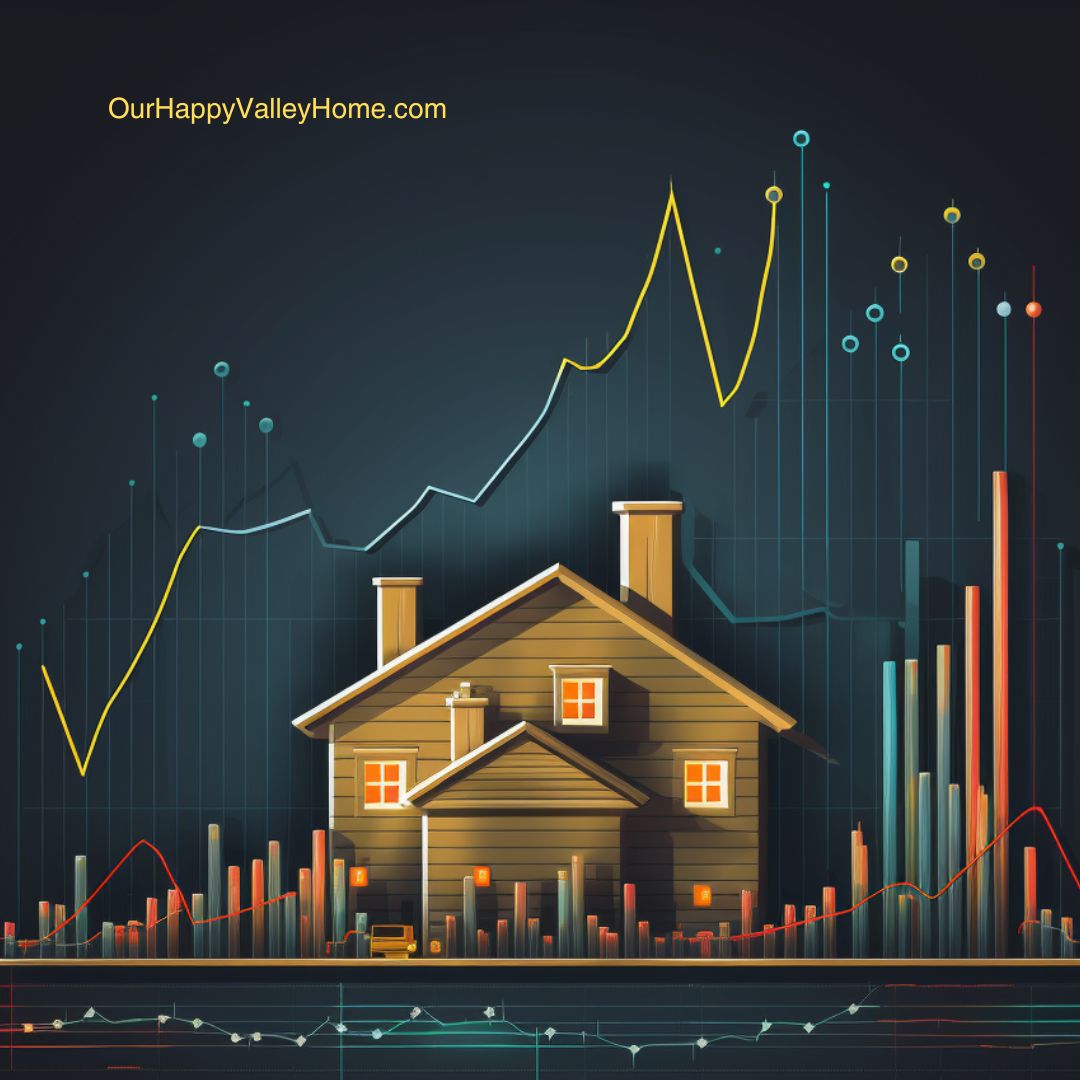
An Automated Valuation Model (AVM) is a tech-savvy mathematical tool that provides a property's estimated value through algorithms. Generally utilized by homebuyers, real estate professionals, and lenders, AVMs offer a snapshot of a property's market worth based on multiple data points like property features, sales history, and tax assessments.
The AVM employs proprietary software and complex algorithms, using information like square footage, property listings in the area, and recent sales to generate an estimate. Notably, each AVM platform uses its unique formula, meaning estimates for the same property may vary across different models.
Objective Estimate: AVMs apply the same algorithms across all properties, reducing the risk of human error or bias.
Quick Snapshot: They provide a fast and often free way to gauge a property's value.
Realtor's Friend: These models can serve as a powerful marketing tool for real estate agents.
Data Limitations: AVMs are as good as the data they use. They can be inaccurate if based on outdated or incomplete information.
Condition Blind: AVMs can't assess the actual condition of a property, missing out on elements like repairs or upgrades.
While consumer-facing AVMs are popular, commercial platforms by Freddie Mac, CoreLogic, and others are often used by industry professionals and financial institutions.
Automated Valuation Models (AVMs) offer a quick and easy way to get an estimated value of a property based on mathematical algorithms and available data. However, it's essential to recognize that AVMs have some significant limitations. While these tools are handy for providing a preliminary understanding of a property's worth, they shouldn't replace an in-depth analysis or a professional appraisal for several reasons:
Home Condition
AVMs do not physically inspect a property. As a result, they cannot evaluate the home's current condition, such as necessary repairs, foundational issues, or general cleanliness. A well-maintained home might be worth significantly more than an identical but dilapidated home in the same neighborhood. Since AVMs cannot discern this difference, their valuation may miss the mark.
Recent Upgrades
Upgrading areas of the home like the kitchen or bathrooms can add considerable value to the property. However, AVMs are unlikely to have real-time data on these improvements unless they have been reported and added to the public records. A home that has undergone recent, high-quality renovations will likely be undervalued by an AVM that does not factor in these upgrades.
Location Factors
The old adage "location, location, location" holds a lot of weight in real estate valuation. Factors like whether a home is on a busy street or nestled in a quiet cul-de-sac can have a significant impact on its value. Proximity to public transportation can also affect a property's worth. AVMs may not always have access to or appropriately weight these nuanced location-based factors, resulting in less accurate valuations.
Local Factors
Several local elements can influence a property's value. These include the quality of local schools, zoning laws, and future development plans in the area. Even factors like local hype—such as large employers moving into the area, which could potentially increase property demand—aren't accounted for by most AVMs. Without the inclusion of this local context, the AVM may provide a skewed value estimate.
Conclusion
While AVMs can provide a useful starting point for gauging a property's value, their limitations mean that they should not be the sole method relied upon for serious financial decisions. For a more accurate and holistic property valuation, consider engaging the services of a qualified real estate professional who can perform a comprehensive appraisal, taking into account the various factors that AVMs often overlook.
Frances Thorsen is a leading real estate author and thought leader. She got her real estate license and became a REALTOR® in 1985. She was an early adopter of real estate technology on the Interne....
Welcome to the Sorting Hat for HomeownersIf Hogwarts had a campus in State College (and honestly, it should—those turrets would look spectacular against a football Saturday sky), the Sorting
In a move that could significantly alter the landscape of real estate transactions in the United States, the Department of Justice (DOJ) has recently filed a statement of interest in a major ongoing
Pippi Longstocking: "Good day! It's me, Pippi Longstocking, ready to embark on the grand adventure of selling my beloved Villa Villekulla. But, oh my stars, I hear things are changing in the
Get ready for some fun insights from Zillow's cool research in 2023. You won't believe what people have been typing into Zillow's search bar! 🏠✨Picture this: millions of Americans, just like
 The data relating to real estate for sale on this web site comes in part from the Internet Data Exchange of the Greater Lehigh Valley REALTORS®. Real Estate listings held by brokerage firms (licensees) other than #firm are marked with the IDX logo and detailed information about them includes the name of the listing brokers.
The information being provided is for consumers personal, non-commercial use and may not be used for any purpose other than to identify prospective properties consumers
may be interested in purchasing.
Data last updated September 23, 2026 3:32 PM UTC
Show More...
The data relating to real estate for sale on this web site comes in part from the Internet Data Exchange of the Greater Lehigh Valley REALTORS®. Real Estate listings held by brokerage firms (licensees) other than #firm are marked with the IDX logo and detailed information about them includes the name of the listing brokers.
The information being provided is for consumers personal, non-commercial use and may not be used for any purpose other than to identify prospective properties consumers
may be interested in purchasing.
Data last updated September 23, 2026 3:32 PM UTC
Show More...
 © BRIGHT, All Rights Reserved
Information Deemed Reliable But Not Guaranteed
The data relating to real estate for sale on this website appears in part through the BRIGHT Internet Data Exchange program, a voluntary cooperative exchange of
property listing data between licensed real estate brokerage firms in which
participates, and is provided by BRIGHT through a licensing agreement.
The information provided by this website is for the personal,
non-commercial use of consumers and may not be used for any purpose other than to identify prospective properties consumers may be interested in purchasing.
Data last updated: September 23, 2026 1:48 PM UTC
Some properties which appear for sale on this website may no longer be available
because they are under contract, have Closed or are no longer being offered for sale.
Some real estate firms do not participate in IDX and their listings do not appear on this website. Some properties listed with participating firms do not appear on this website at the request of the seller.
Show More...
 All information deemed reliable but not guaranteed. All properties are subject to prior sale, change or withdrawal. Neither listing broker(s) or information provider(s) shall be responsible for any typographical errors, misinformation, misprints and shall be held totally harmless. Listing(s) information is provided for consumer's personal, non-commercial use and may not be used for any purpose other than to identify prospective properties consumers may be interested in purchasing. The data relating
to real estate for sale on this website comes in part from the Internet Data Exchange program of the Multiple Listing Service. Real estate listings held by brokerage firms other than eXp Realty in Centre County may be marked with the Internet Data Exchange logo and detailed information about those properties will include the name of the listing broker(s) when required by the MLS. Copyright ©2026 All rights reserved.
Last Updated: September 23, 2026 3:24 PM UTC
Show More...
All information deemed reliable but not guaranteed. All properties are subject to prior sale, change or withdrawal. Neither listing broker(s) or information provider(s) shall be responsible for any typographical errors, misinformation, misprints and shall be held totally harmless. Listing(s) information is provided for consumer's personal, non-commercial use and may not be used for any purpose other than to identify prospective properties consumers may be interested in purchasing. The data relating
to real estate for sale on this website comes in part from the Internet Data Exchange program of the Multiple Listing Service. Real estate listings held by brokerage firms other than eXp Realty in Centre County may be marked with the Internet Data Exchange logo and detailed information about those properties will include the name of the listing broker(s) when required by the MLS. Copyright ©2026 All rights reserved.
Last Updated: September 23, 2026 3:24 PM UTC
Show More...
